Introduction
위치 ㅣ수원시 장안구 율천동 487-1
용도 ㅣ유치원
층수 ㅣ2층
Location ㅣ487-1, Suwon-si, Gyeonggi-do, Korea
Program ㅣ Kindergarten
Floors ㅣ2F
Agenda
해당 유치원 프로젝트는 기존 유치원에 대해 개인적으로 품고 있던 다음 질문들에 해답을 찾고자 한 결과물이다:
1. 유치원은 반드시 단일 건물이어야 하는가?
2. 유치원 내 교실들은 모두 획일적인 양상이어야 하는가?
3. 아이들이 외부 환경과 보다 적극적으로 상호작용할 수 있는 건축적 방안은 무엇인가?
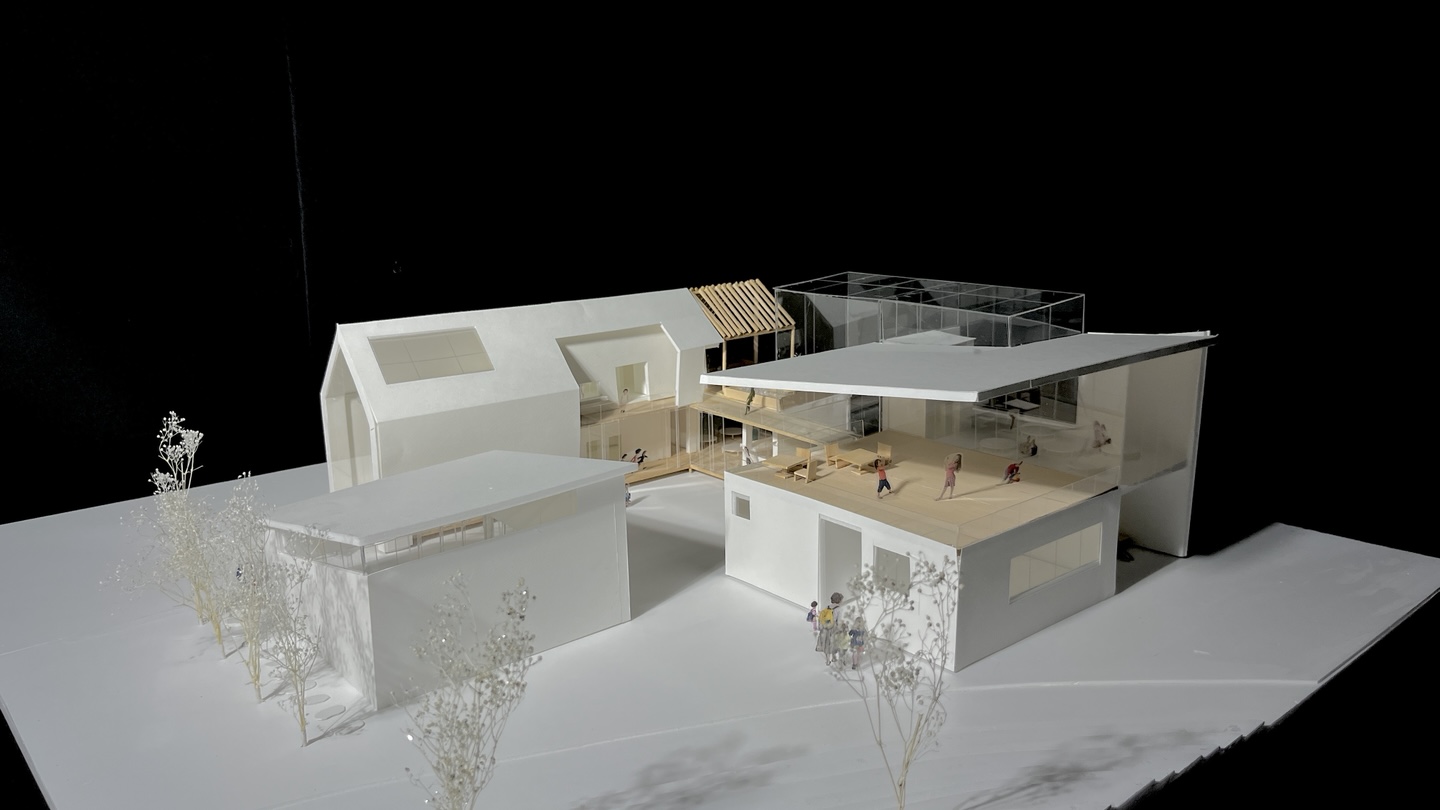
기존의 수직적으로 거대한 단일 유치원에서 탈피해 각 교실을 하나의 독립적인 동으로 간주하여 분리한 뒤, 매채게 역할인 ‘마루’를 통해 프로그램들을 하나로 연결했다. ‘마루’는 아이들이 교실에서 나와 자유롭게 뛰놀 수 있는 놀이의 장 그 자체가 되기도 할 뿐만 아니라 마루 도서관이나 마루 식당, 텃밭과 같이 여러 프로그램들을 하나로 연결해주는 징검다리의 역할도 수행한다.
This kindergarten project is the outcome of an architectural exploration aimed at addressing the following inquiries I had about conventional kindergartens:
1. Must a kindergarten necessarily be a single, monolithic structure?
2. Should the classrooms conform to a uniform spatial configuration?
3. What architectural strategies can facilitate more active interaction between children and the external environment?
Moving away from the conventional vertically massive, monolithic kindergarten model, each classroom is considered an independent unit, separated yet interconnected through the “Maru,” a transitional space that acts as a mediator. The “Maru” not only serves as an open play area where children can freely engage beyond the boundaries of their classrooms but also functions as a connective platform that integrates various programs like the Maru Library, Maru Dining Hall, and vegetable gardens. This connective network fosters interaction and versatility, forming a dynamic, interconnected educational environment.
Concept

중앙마당을 중심으로 각 교실에서도 개별 마당을 마루를 통해 마주보도록 하여 어디서든 자연에 근접할 수 있도록 조닝을 구상했다.
Focusing on the central yard, zoning was designed so that each classroom could face the individual yard through the floor so that it could be close to nature from anywhere.

기존의 거대한 단일 매스로 구성되어 있는 유치원과 달리, 각 교실을 하나의 건물 동으로 분리하여 아이들의 눈높이에 맞게 개별 동으로 유치원을 분리하였다. 이를 통해 어느 교실에서든, 어느 위치에서든 자연과 맞닿아 있을 수 있도록 하여 대지의 녹지와 호수를 유치원 내부로 진입시켰다. 수직적인 단일 유치원이 아닌, 수평적이고 개별적인 유치원을 통해 아이들이 자유롭게 자연을 향유할 수 있도록 한 것이다.
뿐만 아니라 자연과 건축을 잇는 매개체 역할인 ‘마루’라는 건축적 요소를 차용해 개별적으로 분리되어 있는 각 교실을 마루로 모두 연결했다. ‘마루’는 아이들이 교실에서 나와 자유롭게 뛰놀 수 있는 놀이의 장 그 자체가 되기도 할 뿐만 아니라 마루 도서관이나 마루 식당, 텃밭과 같이 여러 프로그램들을 하나로 연결해주는 징검다리의 역할도 수행한다.
Unlike the existing kindergarten, which consists of a single large mass, each classroom was divided into one building building, and the kindergarten was separated into individual buildings according to the children’s eye level. Through this, the green area and lake of the land were introduced into the kindergarten by allowing it to be in contact with nature in any classroom or location. It was not a single vertical kindergarten, but a horizontal and individual kindergarten so that children could enjoy nature freely.
In addition, each individually separated classroom was connected to the floor by borrowing an architectural element called “Maru,” which serves as a medium between nature and architecture. Not only is “Maru” a place for children to come out of the classroom and play freely, but it also serves as a stepping stone to connect various programs such as the Maru Library, Maru Restaurant, and Garden.
Design


Program

Drawings


Maquette


credit