위치 ㅣ스페인 카나리아 제도, 라 팔마 섬
용도 ㅣ 해변 공공 시설
Location ㅣSpain, Canary Islands, La Palma Island
Program ㅣ public facility
Agenda
‘탄력성’은 오늘날 많은 분야에서 필수적인 역량이지만 건축에선 더욱 중요한 개념으로 부각되고 있다. 지구가 겪는 자연 재해, 코로나 등 불확실한 변화에 대응하기 위해서는 탄력적인 설계가 필요하기 때문이다. 특히 대상지인 라 팔마 섬은 화산 폭발로 인한 재난을 겪은 곳이기에 탄력성의 필요에 대한 사회적 공감도가 높은 곳이다. 이에 따라 지역 내에서 수급 및 제작할 수 있는 가변적인 모듈을 통해 만든 해변 공공 시설을 제안한다.
‘Flexibility’ is an essential capability in many fields today, but it is becoming an even more critical concept in architecture. Flexible design is necessary to respond to the uncertain changes brought about by natural disasters, such as earthquakes and the COVID-19 pandemic. The island of La Palma, the project site, has experienced volcanic eruptions, making the societal consensus on the need for flexiblity particularly strong. Therefore, This project propose a public beach facility made from adaptable modules that can be sourced and produced locally.
Site
대상지인 카나리아 제도의 라 팔마 섬은 재앙에 대비해 탄력적인 설계를 할 필요가 높다. 라 팔마 섬은 2021년 쿰브레 비에하 화산 폭발로 인해 자연적, 경제적, 사회적인 재앙이 발생한 바 있다(2021년 9월 19일 ~ 12월 13일). 이 재앙을 통해 겪은 변화와 비상 상황은 우리가 생활 공간과 환경을 설계하는 방식을 재고하게 만들었다.
이 프로젝트는 라 팔마의 타사코르테 지역에서 진행되었다. 타사코르테 마을은 크게 해발이 높은 주도심과 해양 활동을 중심으로 발전한 항구 지역으로 나뉜다. 이번 프로젝트는 항구 지역에서 진행되었다.
The island of La Palma in the Canary Islands necessitates flexible design to prepare for disasters. La Palma experienced natural, economic, and social catastrophes due to the Cumbre Vieja volcanic eruption from September 19 to December 13, 2021. The changes and emergencies resulting from this disaster have prompted a reevaluation of how we design our living spaces and environments.
This project took place in the Tazacorte area of La Palma. The village of Tazacorte is divided into two main parts: the main urban area at a higher level and the port area, which developed around marine activities. This project was carried out in the port area.

Program
[공공 다목적 및 가역적 인프라]
[Public Multi-Purpose and Flexible Infrastructure]
이 프로젝트는 항구 지역의 인구와 바다 사이 거리를 가깝게 하는 공공 인프라를 구축하는 것을 목표로 한다. 이를 위해 항구 지역 내 바다와 접하지만 활용도가 낮았던 도시 공터를 설계 대상지로 하였다.
라 팔마 섬과 같이 언제 또 재난이 찾아올지 모르는 곳에서는 ‘탄력성’을 고려한 설계가 필수적이다. 보수 및 교체가 용이한 탄력적인 인프라를 구축하기 위해서는 우선 가볍지만 튼튼한 재료를 사용해야 하며, 재사용이 가능해야 한다.
This project aims to create public infrastructure that brings the population of the port area closer to the sea. To achieve this, we selected an underutilized urban space within the port area that is adjacent to the sea as the design site.
In a place like La Palma, where disasters can strike unexpectedly, designing with ‘flexibility’ in mind is essential. Building resilient infrastructure that is easy to maintain and replace requires using lightweight yet sturdy materials that can be reused.
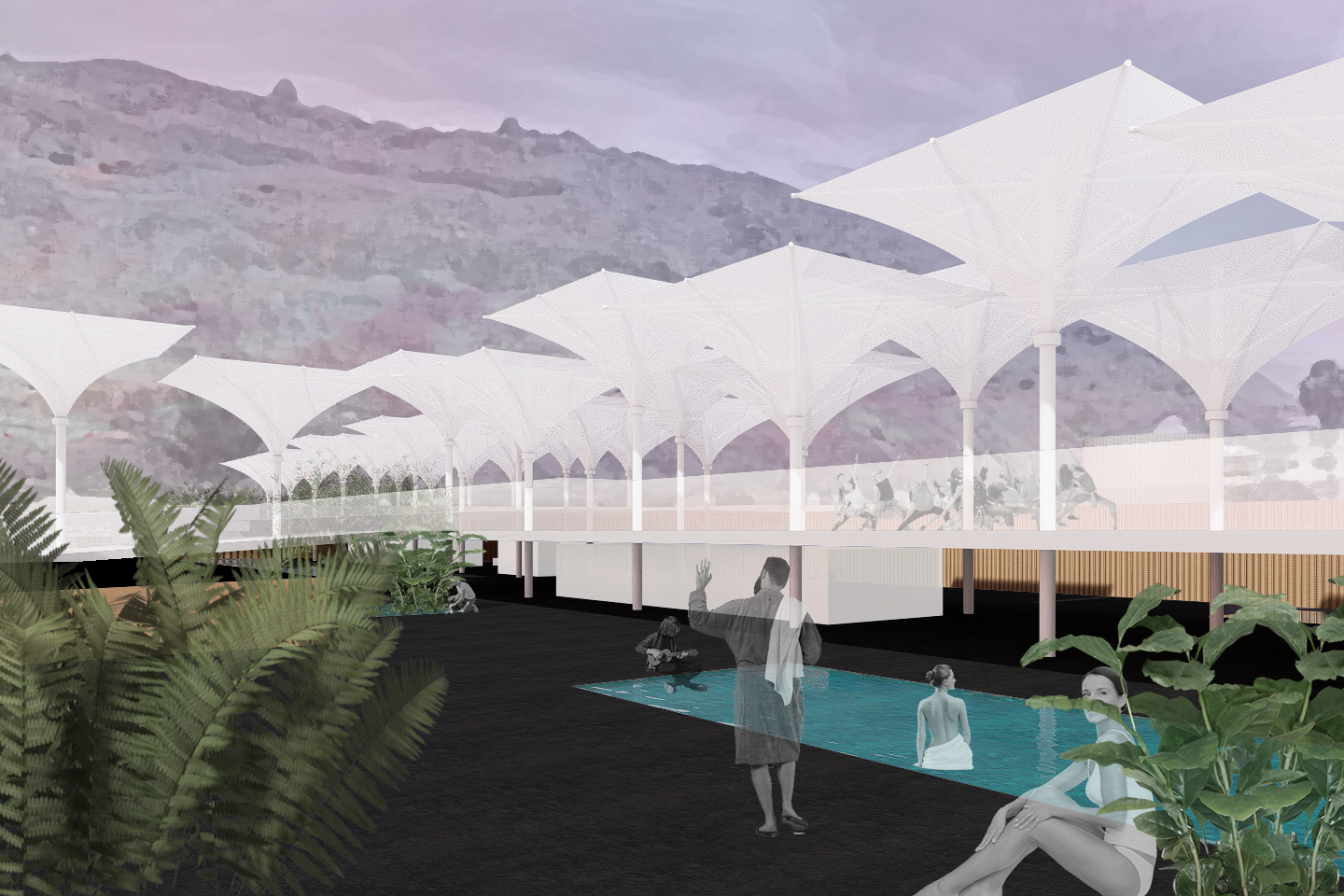
이러한 요구를 충족하기 위해 강철 구조를 뼈대로 삼은 막 구조를 기본 모듈로 설정했다. 이 모듈을 이루는 재료는 모두 지역 친화적이다. 먼저, 모듈을 이루는 강철은 섬 내부의 광산에서 구해져 지역 내 공장을 통해 가공된다. 둘째로, 막 구조의 막은 일상생활에서 사용되는 옷이나 천으로부터 재활용되어 만들어진다. 선큰 공간의 바닥재 또한 타사코르테 해변의 검은 모래를 사용하여 수급이 용이하게 했을 뿐만 아니라 공간의 통일성까지 주었다. 지역에서 수급된 재료들은 재난 상황 시 지역 공동체 내에서 시설물의 재건이 가능하게 한다.
‘사회와 바다를 연결하는 공공 인프라 설립’이라는 목표는 모듈의 배치를 통해 달성할 수 있다. 이 공공 시설은 햇빛은 투과시키지만 비는 막아주는 천장 막, 해변으로 연결되는 브릿지 바닥, 그리고 모듈의 규격을 활용한 선큰 수공간 영역으로 구성된다. 브릿지 바닥은 선큰 위로 조립되어 항구 인구와 바다의 접근성을 높이고, 천장 막은 하단 브릿지를 ‘머물고 싶은 공공 공간’으로 기능할 수 있게 돕는다. 선큰 수공간은 바닷물을 담수화한 물이 사용되며, 이러한 담수는 공공 인프라를 운영하는 데에도 활용된다.
To meet these requirements, we based the primary module on a membrane structure supported by a steel frame. All materials used for this module are locally sourced. First, the steel for the module is obtained from local mines and processed in nearby factories. Second, the membrane for the structure is made from recycled fabrics, such as everyday clothing and textiles. The flooring of the sunken space also uses black sand from Tazacorte Beach, ensuring easy procurement and a unified aesthetic. These locally sourced materials enable the community to rebuild the facilities in the event of a disaster.
The goal of ‘establishing public infrastructure that connects society and the sea’ can be achieved through the arrangement of the modules. This public facility comprises a ceiling membrane that lets sunlight through but blocks rain, a bridge floor connecting to the beach, and a sunken water area utilizing the module’s dimensions. The bridge floor is assembled over the sunken area, enhancing accessibility between the port’s population and the sea, while the ceiling membrane helps the lower bridge function as a ‘public space where people want to stay.’ The sunken water area uses desalinated seawater, which is also utilized in operating the public infrastructure.


Plan


Images

Maquette


credit