Introdution
위치 | 경기도 고양시 덕양구 행주외동 242 일대
용도 | 모터스포츠 기반 문화 시설
대지면적 | 609,058 ㎡
Location | 242, Haengjuoe-dong, Deogyang-gu, Goyang-si. Gyeonggi-do
Program | cultular facility
Site area | 609,058 ㎡
Agenda
한국은 약 40년의 모터스포츠 역사를 보유한 세계적인 자동차 생산국이다. 그러나 모터스포츠를 근간으로 하는 모빌리티 문화는 산업, 경험, 역사, 제도, 모터스포츠의 관계는 매우 불균형하게 형성되어 있다.
지금까지 정부 및 지자체는 모터스포츠와 연관 산업, 문화 발전을 위한 다양한 프로젝트를 추진해왔다. 하지만 각 요소간의 복잡한 이해관계와 협상의 난항으로 인해 대부분의 시도가 좌절되고 정체된다.
이는 상이한 환경의 요소들을 물리적 공간에 강제로 집적시켜 해결하려는 접근 방식에서 기인한다고 생각된다.
복합적으로 얽힌 관계를 단순한 물리적 공간만으로 해결하는 데에는 명확한 한계가 존재한다. 그렇다면 난항을 겪는 한국의 모빌리티 문화 허브를 공간적으로 어떻게 해소할 수 있을까?
본 프로젝트는 다양한 사유과 관계 속에서 정체된 본 문제를 유기적인 관계 기반의 물리적 공간 제안을 통해 해결책을 모색한다.
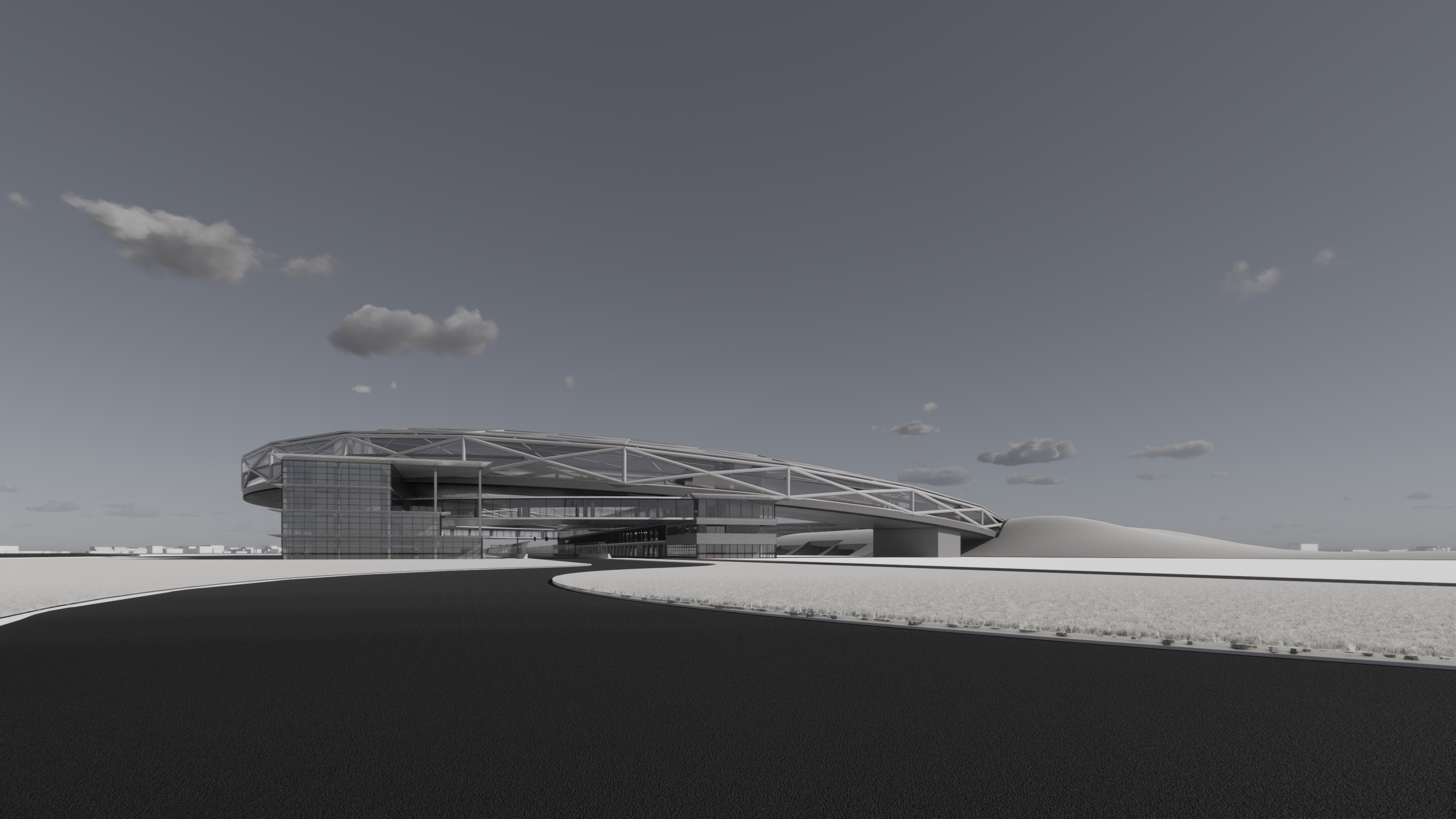
이에 따라, 모터스포츠, 산업 그리고 경험의 요소들을 유기적으로 연계하고 상호작용을 촉진하기 위해, 과거부터 모빌리티 산업 및 문화가 집적된 경기도 고양시에 [MOVEMENT GOYANG – 모터스포츠 기반의 모빌리티 문화 허브]를 제안한다.
South Korea, a global automotive manufacturing powerhouse, boasts a nearly 40-year history in motorsport. However, the Mobility Culture, rooted in exhibits significant imbalance in the relationships among INDUSTRY, EXPERIENCE, HISTORY, INSTITUTIONS AND MOTORSPORT itself.
To date, central and local governments have initiated numerous projects aimed at fostering motorsport and its associated industries and culture. Yet, most of these endeavors have faced setbacks and stagnation due to complex inter-element relationships and difficult negotiations.
This is largely attributed to an approach that attempts to forcibly resolve the challenges by physically concentrating disparate elements within a single space.
Clearly, there are inherent limitations in addressing these intricate, interconnected relationships solely through simple physical spaces. So, how can i spatially resolve the present challenges facing Korea’s mobility culture hub?
This project seeks a solution by proposing a physical space grounded in organic relationship to address the issues that have been stagnant due to various underlying reasons and connactions.
Accordingly, to organically link the elements of motorsport, industry, and experience, and to promote their interactions, I propose [ MOVEMENT GOYANG -Motorsport-Based Mobility Culture Hub ] in Goyang, Gyeonggi Province, a region historically rich in mobility industry and culture.
Concept

Site

Design

기존 토지이용 패턴을 따라 모터스포츠 프로그램을 대치에 배치해본다. 트랙 배치도 상으로도 부지의 역사적 문화적 맥락의 흐름에 따라 레이아웃이 만들어지는 것을 알 수 있다. 해당 대지 외부까지 프로그램이 확장되거나 더해지는 등 유동적으로 프로그램 이 변화하기에 용이할 것이다.
The motorsport program is arranged on the site in alignment with the existing land-use patterns. The track layout itself reflects the historical and cultural context of the site, revealing how the spatial composition emerges from these contextual flows. As the program has the potential to extend beyond the site boundaries or evolve over time, this flexible layout allows for dynamic transformation and expansion.

구체적인 배치 전략은 다음과 같다.
모터스포츠는 FIA (국제 자동차 연맹)의 다양한 규정 속 몇가지 Grade로 나뉘어 가능한 경기의 규제를 받는다. 또한 대지의 생김새에 따라 주어진 ‘최소 트랙 길이, ‘최소 코너 수, ‘최대시속 제한’ 등 안전과 게임에 관련된 룰을 기반으로 전반적 레이아웃을 배치한다. 본 프로젝트는 모터스포츠를 기반으로 한 복합문화허브이기에 기본적 규정 속 트랙 레이아웃과 모터스포츠 관련 시설을 대지에 먼저 배치한 후 건축물 설계를 진행하는 방식으로 진행했다.
좌측 서킷 배치 프로세스를 통해 필수적으로 요구되는 규제와 시설을 시작으로 안전과 관련된 시설, 조경 그리고 장래 확장가능성을 고려한 유동적으로 확장가능한 형식으로 트랙과 모터스포츠 기반 시설, 관광시설 그리고 보차동선을 배치하였다.
The specific layout strategy is as follows.
Motorsports are governed by various regulations set by the FIA (Fédération Internationale de l’Automobile), and racing events are permitted only under certain Grades defined by these rules. Depending on the site’s conditions, overall layout planning must comply with safety and gameplay-related requirements, such as minimum track length, minimum number of corners, and maximum speed limits. As this project is envisioned as a motorsport-based cultural hub, the design process began by placing the track layout and motorsport-related facilities on the site according to these fundamental regulations, followed by the architectural design.
Through the circuit layout process illustrated on the left, essential regulations and facilities were prioritized. The track, motorsport facilities, tourist amenities, and circulation paths for both vehicles and pedestrians were arranged in a flexible manner—starting from mandatory elements such as safety infrastructure and landscaping, and allowing for future expansion based on a dynamic system.

A,B,C동 간의 연결성 확보를 위해선 평면적 뿐 아니라 입체적 연결성 또한 매우 중요하다. RING 구조체를 기준으로 지름 약 300m의 거리임을 고려한다면 이용자에게 다양한 수평적 이동 선택지를 줌으로써 더욱 다양한 시퀀스를 경험시킬 수 있을 것이다.
To ensure connectivity between Buildings A, B, and C, not only horizontal (plan-based) but also vertical (spatial) connections are crucial. Considering that the RING structure spans a diameter of approximately 300 meters, offering users a variety of horizontal circulation options can enhance the spatial experience by enabling diverse sequences of movement.

다이어그램과 같이 프로젝트를 단면으로 바라봤을 때, 피난거리와 이용자 수, 밀도를 고려하여 주어진 면적에서 가장 효율적으로 이동이 가능한 형식의 입체적 연결성을 확보하였다. 수평적, 입체적 연결성과 RING 구조물의 Panoramic 동선을 포함하여 이용자가 가장 감각적인 경험을 할 수 있는 공간구성을 설정했다.
As shown in the diagram, when viewing the project in section, the design secures a form of vertical connectivity that enables the most efficient circulation within the given area—taking into account evacuation distances, user capacity, and density. By integrating both horizontal and vertical connections, along with the panoramic circulation route of the RING structure, the spatial composition is designed to offer users the most sensory and immersive experience possible.
Plan

Images


Model


credit