Introduction
위치 |서울 중구 황학동 중고주방거리
용도ㅣ복합문화시설
층수 | B2F – 4F
Location |Hwanghak-dong Second-hand Kitchenware Street, Jung-gu, Seoul, Republic of Korea
Programㅣmixed-use
Floors | B2F – 4F
Agenda
황학동 중고주방거리는 폐업한 상점의 집기가 다시 거래되며 새로운 창업으로 이어지는 자원순환의 가능성을 지닌 장소이다. 그러나 현재 는 폐업 자산을 수거·수리해 재판매하는 구조에 머물러 있어, 재가공과 협업을 지원하는 공간이 부족하다. 이에 요식업을 중심으로 인근의 패션·제조·전자·IT 분야와 협업하여 브랜딩, 홍보 콘텐츠 제작, 온라인 판매 등으로 창업 범위를 확장할 수 있는 창업지원센터를 제안한다. 이를 통해 폐업 자산이 창업의 재료가 되고, 황학동의 산업 네트워크와 연결되어 다양한 창업으로 이어지는 새로운 창업거점이 될 것이다.
Hwanghak-dong’s secondhand kitchenware district supports new businesses by repairing and reselling equipment from closed stores. This project proposes a startup support center that links food businesses with nearby fashion, manufacturing, electronics, and IT industries. By turning closed-business assets into resources for new ventures, it aims to become a new startup hub within Hwanghak-dong’s industrial network.
Site

최근 몇 년간 한국의 경제성장률은 점차 둔화되는 반면, 소비자 물가지수는 꾸준히 상승하며 전반적인 생활비 부담이 증가하고 있다. 이에 따라 소비자들은 단순히 저렴한 소비를 넘어 가격대비 효율과 실용성을 중시하는 합리적 소비경향을 보이기 시작했다.
국내 중고거래 시장은 지속적인 성장과 함께 소비자들의 인식 또 한 긍정적으로 변화하고 있다. 온라인 플랫폼의 발달로 거래 접근 성이 높아지면서 중고거래는 더이상 일부 소비자들의 선택이 아닌 대중적인 소비문화로 자리잡고 있다.
황학동은 중고유통 인프라가 발달했지만, 온라인 거래 확산으로 방문객과 매출, 신규 창업자가 감소하며 시장의 불안정성이 커지 고 있다. 또한 장비 구매 중심의 구조는 목적형 방문만 유도해 일 반 소비자의 유입이 제한적이라는 한계가 있다.
황학동 중고주방거리는 폐업 매장의 장비가 새로운 창업자에 게 전달되는 순환구조를 형성하고 있다. 그러나 현재는 장비거래 중심의 단순 유통구조에 머물러 있으며, 창업 정보 공유나 협업 네트워크 형성과 같은 지속적인 지원 체계는 부족한 상황이다.
Korea’s economic growth has slowed in recent years, while consumer prices continue to rise. As living costs increase, consumers are moving beyond simply choosing cheaper products. They now place greater value on efficiency, practicality, and value for money.
The domestic secondhand market continues to grow as consumer attitudes become more positive. Online platforms have improved accessibility, making secondhand trading a mainstream consumption culture rather than a choice limited to a small group.
Online trading has weakened Hwanghak-dong’s secondhand network, reducing visitors, sales, and businesses. Its equipment-focused structure mainly attracts buyers with specific needs, limiting general consumers.
Hwanghak-dong’s secondhand kitchenware district circulates equipment from closed businesses to startups. However, it remains focused on equipment trading, with limited support for information sharing and collaboration.
Concept

중고주방거리와 연계한 창업지원 및 폐업 자산 순환 시스템을 구축하고, 폐업 자산의 수집 • 재가공 • 재유통 과정을 공간 안에서 통합적으로 운영하고자 한다. 또한 전시와 문화 프로그램을 도입해 일반 소비자도 참여할 수 있는 복합문화 소비 공간을 제안한다.
The project links with the secondhand kitchenware district to support startups and circulate closed-business assets through integrated collection, refurbishment, and resale. Exhibitions and cultural programs also create a public cultural retail space.
Mass Strategy

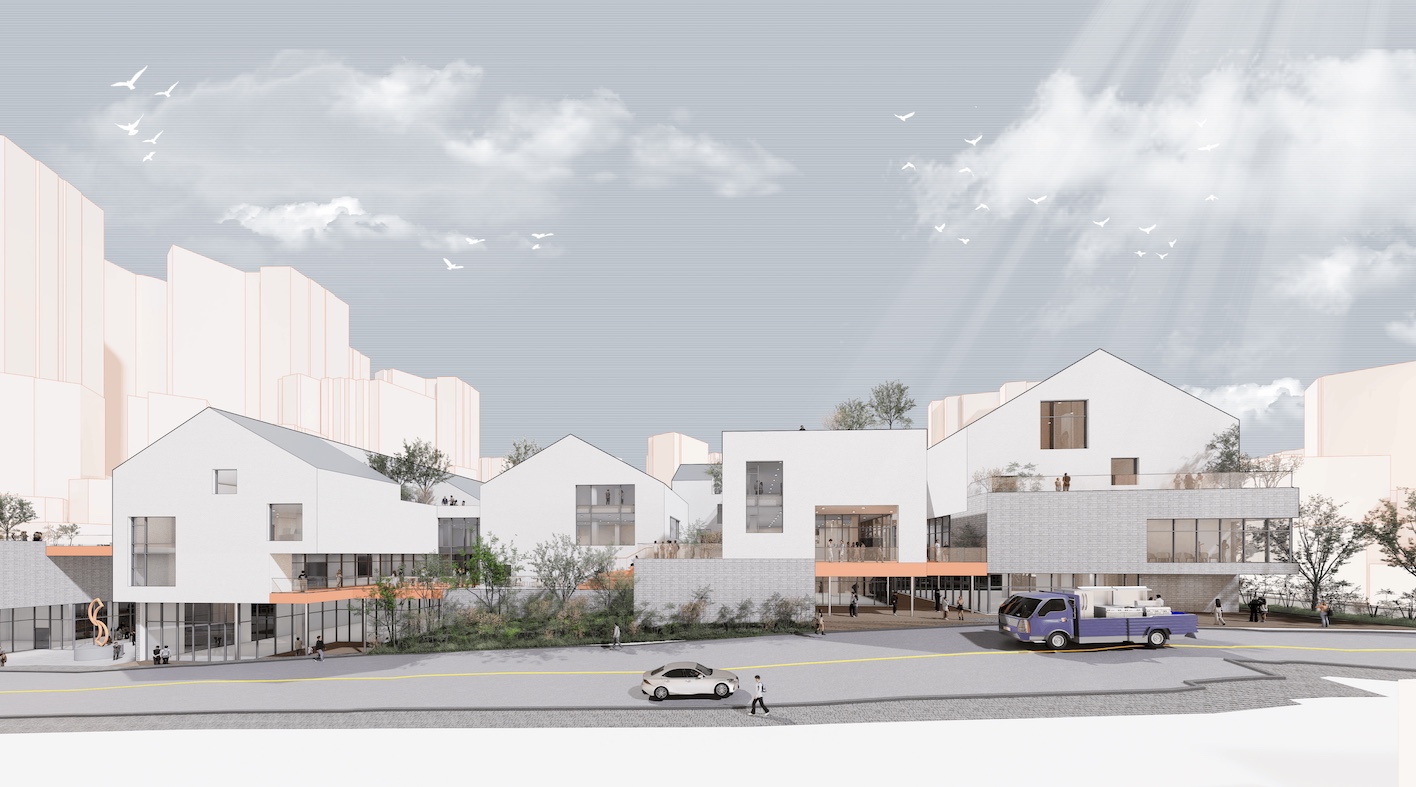
황학동의 골목형 상권과 대지 단차를 건축적으로 재해석해, 서로 다른 프로그램을 여러 매스와 레벨로 분절 배치하였다. 각 분절된 매스는 서로 다른 레벨에서 브릿지로 연결되어 사람과 물건, 정보가 교류하는 입체적인 골목 환경을 형성한다.
Hwanghak-dong’s alley market and sloped site are reinterpreted through fragmented masses and levels, linked by bridges to create a layered network for people, goods, and information.
Program

폐업 자산을 수집·재가공하고, 협업 스튜디오와 팝업마켓을 통해 시장성을 검증한 뒤 창업으로 연결하는 순환형 프로그램을 구성하였다. 이를 통해 자산 순환과 창업 지원, 정보 네트워크가 결합된 도시형 순환경제 플랫폼을 제안한다.
Closed-business assets are reprocessed, tested through collaborative studios and pop-up markets, and linked to new startups. This creates a circular platform integrating asset reuse, startup support, and information exchange.
Drawings


Images


credit